Regeln von Dungeons & Dragons: The Legend of Drizzt Board Game
Überblick
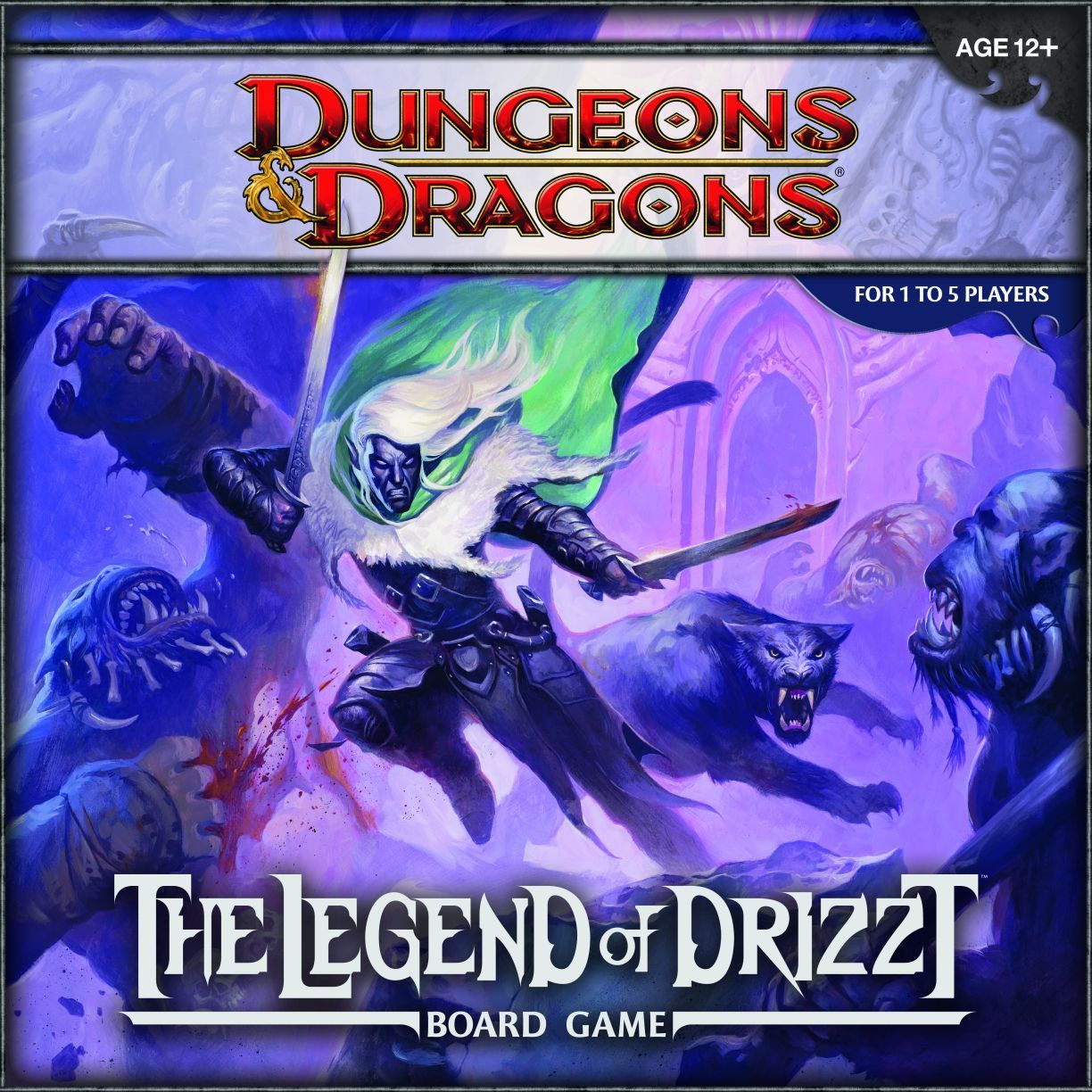
The Legend of Drizzt is a D&D Adventure System board game where each player controls one Hero from the Companions of the Hall while exploring a network of Underdark caverns. Most adventures are cooperative, with the group working together, though some are competitive. You win by completing the objective of the adventure you are playing, such as defeating a specific foe or stopping a drow assault.
Spielaufbau
- Place the Start tile in the center of the table and put two Healing Surge tokens beside it. These are shared by the group.
- Give each player a Sequence of Play card. Each player picks a 1st-level Hero, then takes that Hero's card, Power cards, and matching figure.
- For your first games, use only the Starting Deck (cards 1-100). Adventure 1: Exile is for a solo first game; otherwise play Adventure 2: Search for Mithral Hall.
- Use the adventure's Adventure Setup and Starting Awards sections for any extra pieces, starting surges, and starting Treasure cards.
- Place each Hero figure on any square of the Start tile unless the adventure says otherwise.
- Use the Power cards suggested at the front of the adventure book, and set aside any unused Power cards.
- Build the Cavern Tile stack as the adventure instructs. Keep unused pieces aside in a bag.
Ein Spielzug
Taking turns goes clockwise, starting with a player the group chooses, or with the highest die roll. Each turn has three phases, in order.
Hero Phase
1. If your Hero is at 0 Hit Points, use a Healing Surge token if one is available.
2. Choose one: move then attack, attack then move, or move twice.
Exploration Phase
1. If your Hero stands on a square along an unexplored edge, continue. Otherwise, skip the rest of this phase.
2. Draw a Cavern tile and place it with its triangle pointing toward the unexplored edge your Hero is exploring from.
3. Draw a Monster card, place it in front of you, and place the matching figure on the new tile's mushroom patch. If you already control that Monster, discard the card and draw again. Other players may hold the same Monster.
Villain Phase
1. If you placed no tile this turn, or placed a tile with a black triangle, draw and play an Encounter card.
2. If a Villain is in play, activate it.
3. Activate each Monster and Trap you control, in the order you drew them, following each Monster's tactics.
When your Villain Phase ends, the player to your left begins their turn.
Spielende
- You lose if any Hero starts their turn at 0 Hit Points and no Healing Surge tokens remain, unless the adventure says otherwise.
- You also lose if the adventure's defeat condition is met.
- You win by completing the objective of the adventure, which each adventure lists.
- A Hero may escape the dungeon if the adventure requires it, by ending their Hero Phase on the specified location. After escaping, that Hero skips their Hero and Exploration Phases and no longer draws Encounter cards, but still takes Villain Phases and activates their Monsters and Traps.
Varianten
- Advanced Deck: Adventures 5 and beyond use the Advanced Deck (cards 101-200), which adds Ally cards and more complex effects.
- Choosing Power cards: For an easier game, pick your Power cards freely. For a harder game, draw them at random within each category.
- Cavern Edge tiles: Some adventures close off unexplored edges with Cavern Edge tiles, and some start from a pre-built cavern complex made by placing Cavern and Cavern Edge tiles around the Start tile.
- Competitive adventures: Heroes usually cannot attack each other unless the adventure allows it. Heroes may form teams, each with its own Experience pile. A Villainous Hero counts as both a Villain and a Hero, and acts during its player's Hero Phase.
Änderungen
- Varianten, von dem Entwurf aus der Anleitung, 23. November 2026 (wird jetzt angezeigt)
- Spielende, von dem Entwurf aus der Anleitung, 23. November 2026 (wird jetzt angezeigt)
- Ein Spielzug, von dem Entwurf aus der Anleitung, 23. November 2026 (wird jetzt angezeigt)
- Spielaufbau, von dem Entwurf aus der Anleitung, 23. November 2026 (wird jetzt angezeigt)
- Überblick, von dem Entwurf aus der Anleitung, 23. November 2026 (wird jetzt angezeigt)