Regeln von Polis: Machtkampf um die Vorherrschaft
Überblick
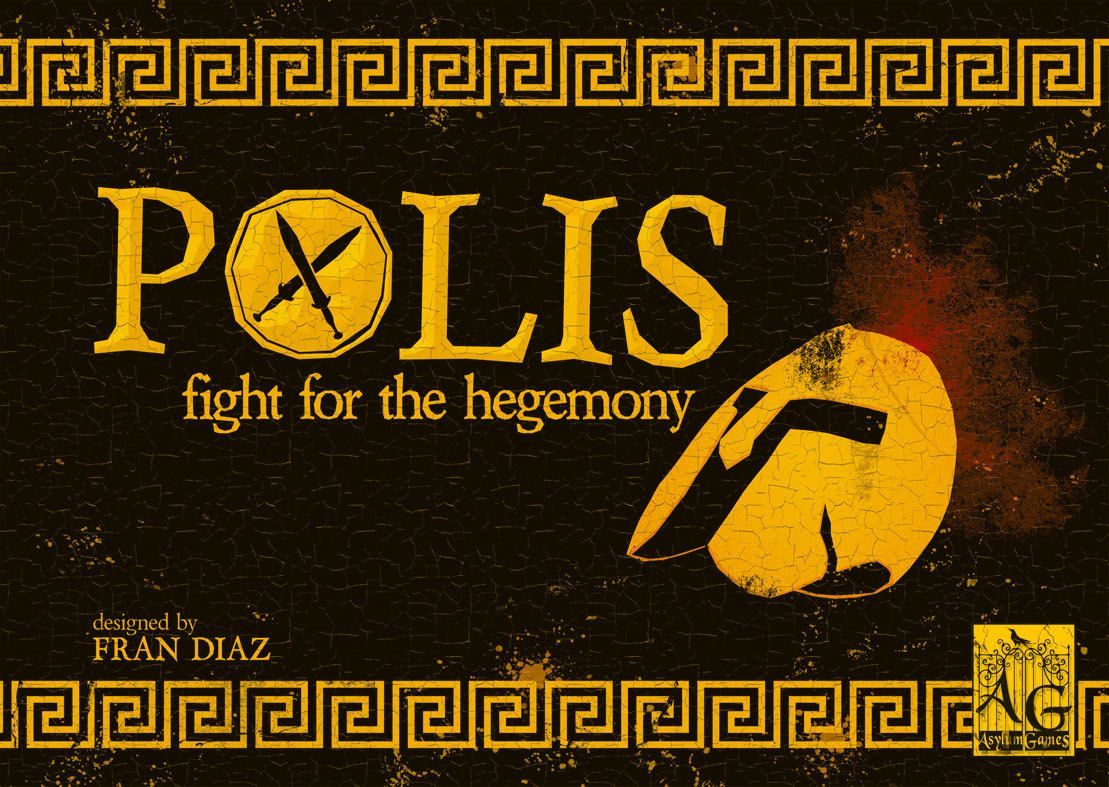
Two players take the roles of Athens or Sparta in 5th century BC Greece, growing a League of allied Poleis over four rounds through diplomacy, trade, sieges and battles. Each player's score is their allied population plus their Prestige plus the Prestige from completed projects, and the highest total wins.
Spielaufbau
Place the 18 Poleis, with neutral ones above the board. Set each player's starting Poleis, units, merchant, Proxenos, starting goods and Prestige as shown in the initial setup table on page 4 of the rulebook. Set the market value markers for the four fluctuating goods at their starting position and put the round marker on round 3. Shuffle the 14 project cards and place them face down beside the board. Shuffle each of the four event decks (rounds 3, 4, 5a, 5b) and keep them face down by round.
Ein Spielzug
At the start of each round, reveal the top 3 projects into the project area. Reveal one event card for the round and place it between the players. The player with more Prestige reads it aloud and applies it first, then the other player does the same. Blue-background text affects only Athens and red-background text only Sparta. The player with less Prestige takes the first turn (ties go to Sparta).
On a turn, a player performs two different actions from the twelve available. Development actions cost no Prestige: create hoplites, create galleys, create merchants, or begin a project. Military actions cost 1 Prestige each: move hoplites, move galleys, besiege a Polis, or collect goods. Political actions are trade, move Proxenos, release Proxenos, or instigate a civil war. Units per region are capped by the round number, which is 3, 4 or 5. After a player's second action, check for a battle.
A player may pass, after which they take no more actions this round. The other player may keep acting alone, but each action then costs 1 goods from their stock, chosen by them. The round ends when both players have passed.
Spielende
At the end of each round the six end-of-round phases are resolved, alternating between players starting with the player who passed first. If a player has no Prestige after these phases, they lose immediately. The game also ends immediately if a player loses their capital. Otherwise, the game ends after the Megalopolis phase of round 5b, which is the last round.
Wertung
Each player adds up three values: the total population of their allied Poleis, their current Prestige, and the Prestige for posterity from completed projects in their Poleis. The player with the higher total wins. If the totals are tied, the player with more goods in stock (metal, wood, wine, oil, silver and wheat combined) wins.
Varianten
The rulebook gives two scenarios, both played on a set starting position and with specified starting units, Poleis, and goods.
- Corinthian War (395 to 387 BC): round 5 only, with no events and no projects, and trade is used. Sparta and Syrakousai face Athens, Thebai, Korinthos and Argos.
- Second Peloponnesian War (431 to 404 BC): round 5 only, with events, projects and trade. Seven named projects are used.
In both scenarios, the starting population of each Polis is given in the scenario table, and the rulebook suggests the first scenario for learning the combat and trade systems.
Änderungen
- Varianten, von dem Entwurf aus der Anleitung, 23. November 2026 (wird jetzt angezeigt)
- Wertung, von dem Entwurf aus der Anleitung, 23. November 2026 (wird jetzt angezeigt)
- Spielende, von dem Entwurf aus der Anleitung, 23. November 2026 (wird jetzt angezeigt)
- Ein Spielzug, von dem Entwurf aus der Anleitung, 23. November 2026 (wird jetzt angezeigt)
- Spielaufbau, von dem Entwurf aus der Anleitung, 23. November 2026 (wird jetzt angezeigt)
- Überblick, von dem Entwurf aus der Anleitung, 23. November 2026 (wird jetzt angezeigt)