Rules of Altiplano
Summary
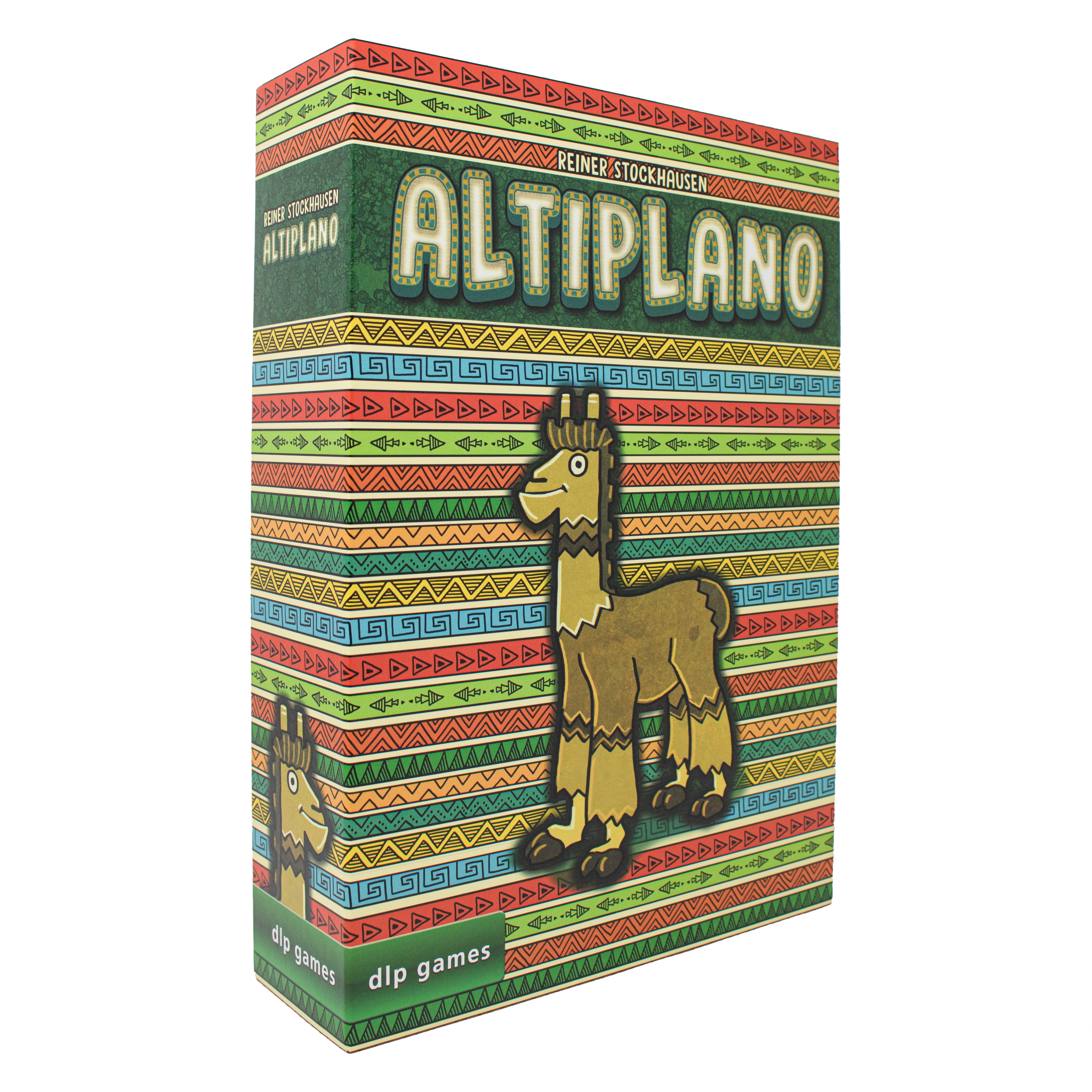
Players run production and trade in a high-altitude South American region, gathering and processing goods, building boats, houses, roads and a warehouse, and fulfilling orders. Each round players draw tiles from their bag, plan where to place them, and take turns carrying out actions. The game ends after a final round once a location is emptied or the extension display can no longer be refilled. The player with the most points wins.
Setup
Place the seven location tiles (village, market, road, harbor, farm, mine, forest) in random order in a circle; this forms the playing area. Divide the goods, carts, orders and extensions among the locations as the player-count table in the rulebook shows, and remove excess goods and carts. Shuffle the order cards and remove 6 (2 or 3 players) or 4 (4 or 5 players) at random. Put the food tiles and all coins in the center. Remove extensions not marked for your player count, sort the rest into piles A to D, shuffle each, and stack them with D at the bottom and A on top. Reveal the top 5 cards next to the extension strip.
Each player takes an action board, warehouse, game figure, marker, container, cart, and cloth bag. Place your marker on the top road space and your cart on the upper cart space of your board. The youngest player gets the starting player figure. Shuffle the role tiles and deal one face down to each player in turn order. Take the goods shown on your role tile and the food and coins listed for it, and put them in your cloth bag.
A turn
Each round has four phases.
- Drawing: Simultaneously, players draw tiles from their cloth bag onto their planning spaces, which start at spaces 1 to 4. You may first return tiles from action spaces to planning spaces. Tiles in your warehouse or on orders may never be returned. When the bag runs out, refill it from your container.
- Planning: Simultaneously, players move tiles from planning spaces to action spaces, role tile, or extensions, as the locations and actions require. Tiles placed in earlier rounds cannot be moved again. The starting player declares planning finished first, then the others clockwise.
- Actions: Starting with the starting player and going clockwise, each player takes one action or passes. Once you pass, you take no more actions this round. Your figure must stand on the location of the action. Movement is free with your cart once per round (up to 3 steps) and otherwise costs 1 food per step from movement spaces. Only coins are spent when used; tiles used for an action go into your container.
- New round: The starting player passes the starting figure to the left. Used carts return to the left. Refill the extension strip, or if none was bought, remove the bottom card and shift the others down.
Basic actions include producing food, wool, cloth, wood, stone or silver, trading cacao or fish, building boats or houses, storing goods in the warehouse, buying carts, selling goods, buying extensions, acquiring orders, delivering goods, and building roads.
End of the game
The game ends when all tiles and cards on at least one location are used up, or when an empty extension-strip space can no longer be refilled. The current round is then completed, followed by one more full round.
Scoring
Each player takes goods from their container, bag, planning and action spaces, role tile, and extensions, and lays them out. Goods in the warehouse also count. Goods on orders never count.
Points: each goods tile scores points as listed in the rulebook's scoring table; each boat scores 2 points and each house 4 points. Completed orders score their listed points; unfulfilled orders score nothing. House cards give a bonus of 1 point per goods tile of the bonused type. Each completed warehouse row scores the points shown at its end.
The player with the most points wins. A tie is broken by the tied player with the most coins.
Variants
Missions expansion: each player gets two missions to fulfill for extra points. Shuffle the mission cards and deal 3 to each player. Keep one face down as your own mission, pass one to each neighbor, and keep one of the two received. In a 2-player game, each player keeps 1 card for themselves, gives 1 to the opponent, and the third is removed. Completed missions score their listed points at the end; only scored goods count toward mission conditions.
Changes
- Variants, by the rulebook draft, 22 November 2026 (shown now)
- Scoring, by the rulebook draft, 22 November 2026 (shown now)
- End of the game, by the rulebook draft, 22 November 2026 (shown now)
- A turn, by the rulebook draft, 22 November 2026 (shown now)
- Setup, by the rulebook draft, 22 November 2026 (shown now)
- Summary, by the rulebook draft, 22 November 2026 (shown now)