Board game mechanic
Action Timer
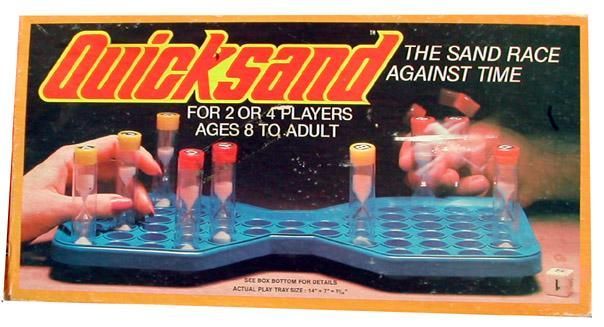
Players must finish each action or turn before a timer runs out, usually a sand timer or hourglass. Running out of time ends the action or passes the turn, which pressures quick decisions.
An action timer sets a fixed time limit on a player's action or turn, most often measured with a sand timer, hourglass, or countdown clock. The rules still define which actions are legal; the timer only limits how long a player may deliberate. Some games time the whole turn, while others time a single choice such as a bid.
The timer starts when a player begins deliberating, often as the previous player finishes. The player chooses and carries out the action while the timer runs. If the action is completed in time, play continues normally. If the timer empties first, the rules state the penalty: the action may be lost, the turn may pass, or the player must commit to what is already arranged. Some games allow a single extension.
The mechanic asks players to decide quickly and accept imperfect choices. Experienced players can plan during other players' turns, which eases the pressure, while newer players may feel rushed. Because the limit is fixed, it shifts weight from exhaustive calculation toward recognizing good options, and a slow moment can cost an action.
Action timers are often paired with real-time play, where all players act at once, or with games that give each player a set number of actions. Variants include a shared timer for the whole table, a timer that resets each turn, and a timer used only for hidden bidding or drafting. Some games use a timer as a penalty rather than a hard cut-off.