Board game mechanic
tile-based game
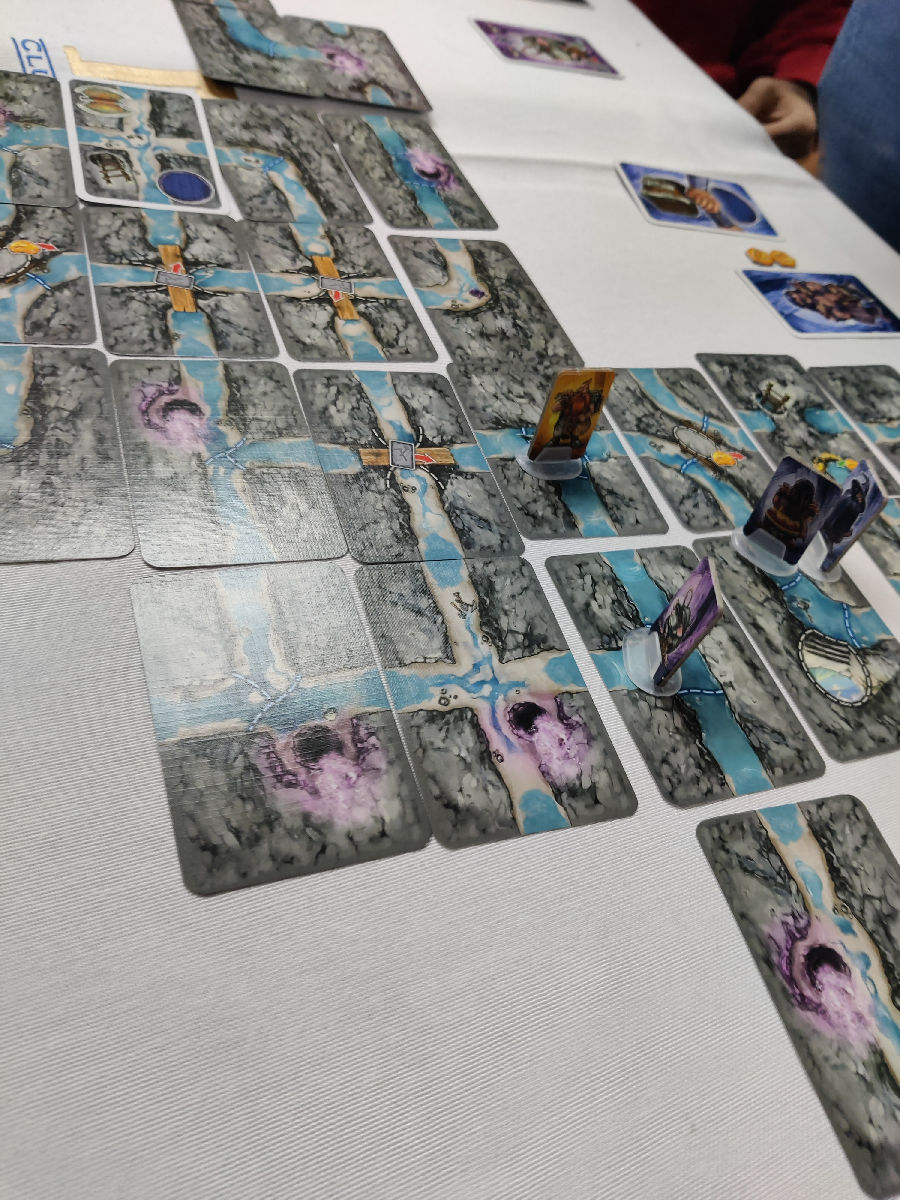
Players draw, place, or move tiles, and the tiles build the board as play goes on. Where a tile goes decides positions, scoring, and what becomes available to each player.
The label covers games whose play area or main components are tiles that players draw, place, or move. The board forms during play rather than being set up in full at the start; the label groups games by this feature, not by a single procedure.
A common pattern has a player draw a tile from a stack or shared supply and add it to the layout so it touches tiles already in play. Some games require matching edges, colors, or terrain with neighbors. The placement then decides scoring, movement, or claiming of spaces, and the turn passes on until the stack is used up or a stated condition ends the game.
Players weigh where a tile fits against what it opens for themselves and for rivals. When tiles come from a random draw, players plan without knowing later tiles. Some games reduce this luck by letting players pick from several tiles or by fixing the order. Feel ranges from quiet puzzle-solving to direct competition over space.
Variants differ in whether placed tiles stay fixed; some let players slide, rotate, or remove tiles already on the board. The tiles are often paired with other mechanics, such as area control or set collection, where the layout is the map and other rules score it.