Board game mechanic
Trick-taking
Players take turns playing one card each into a shared area, and the rules decide which card wins the group. The winner collects those cards and leads the next one, and scoring usually depends on tricks or card values.
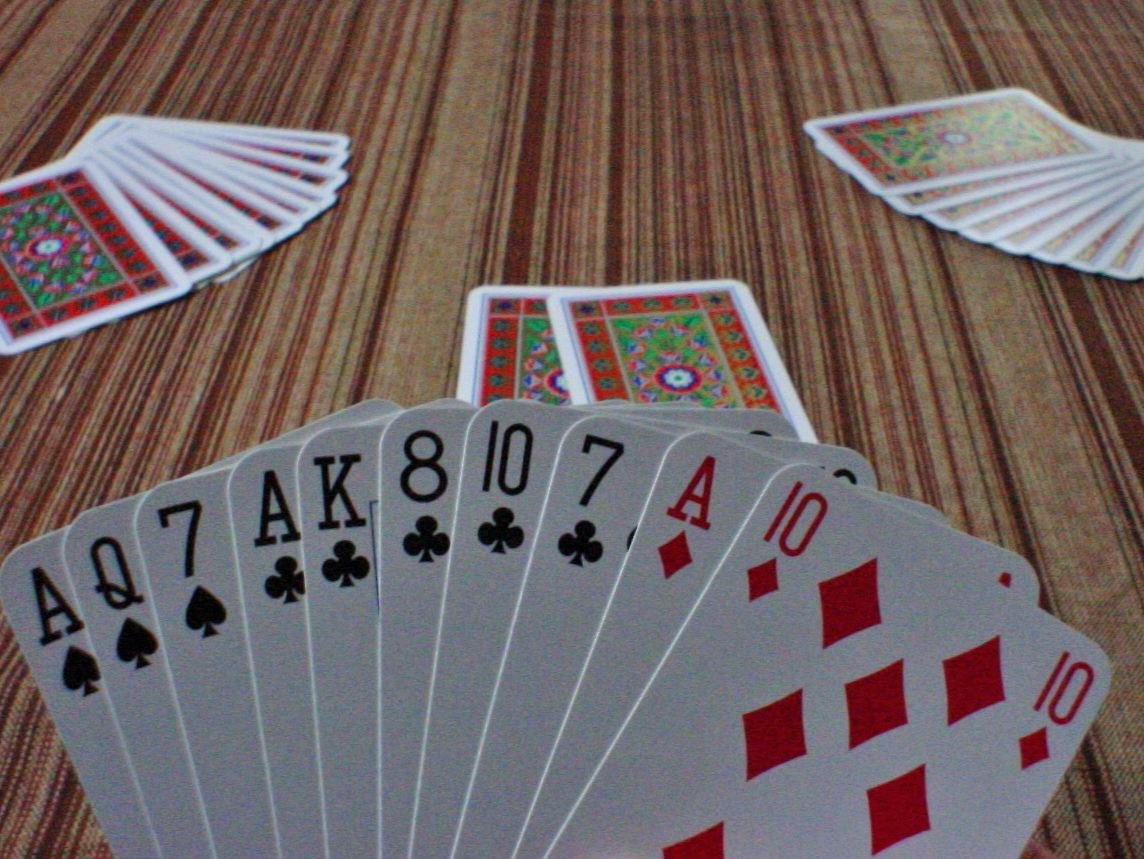
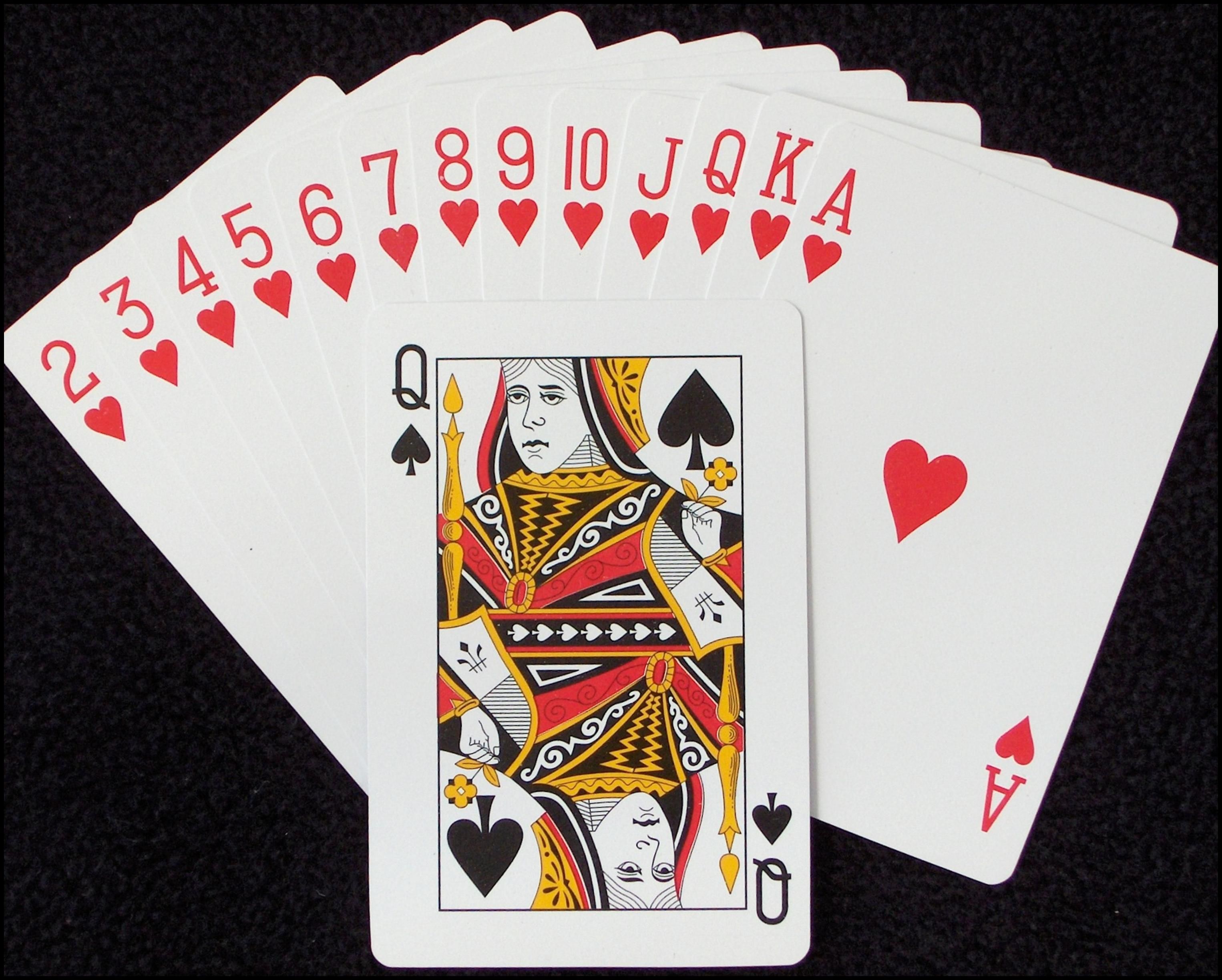
Trick-taking is a mechanic in which players play cards from their hands one at a time into a shared area, forming a trick. The rules decide which card wins each trick, most often the highest card of the suit that was led, unless a trump suit is in play. The player who wins a trick collects it and leads the next one.
A round consists of a fixed number of tricks, usually one per card dealt. The leader plays first, and each other player in turn order must follow suit if able. If a player cannot follow, they may play a trump or any other card. When all have played, the winning card is identified and the cards are taken face down. Points are then counted from the taken cards or the number of tricks won, and a new round begins.
Players must keep track of which cards have been played and which remain in other hands, and decide when to spend a high card or a trump. Many games add a bidding step before play, so the aim becomes winning exactly the number of tricks declared. Skill lies in inference and timing, while the deal supplies much of the luck.
Variants include partnerships in which teammates share tricks, games with no trump suit, card-passing before play, and special cards that override the normal ranking. Some games score by avoiding tricks instead of taking them.