Board game mechanic
Predictive Bid
Players secretly or openly state how many tricks, points, or successes they expect to achieve in a round. They score by how closely the actual result matches the prediction.
Predictive bidding is a mechanic in which each player states how many tricks, points, or successes they expect to achieve in a round. The bid is a forecast rather than a price, and the result is measured against it. Some games treat the bid as a target to hit exactly, while others reward any reasonable shortfall or overshoot.
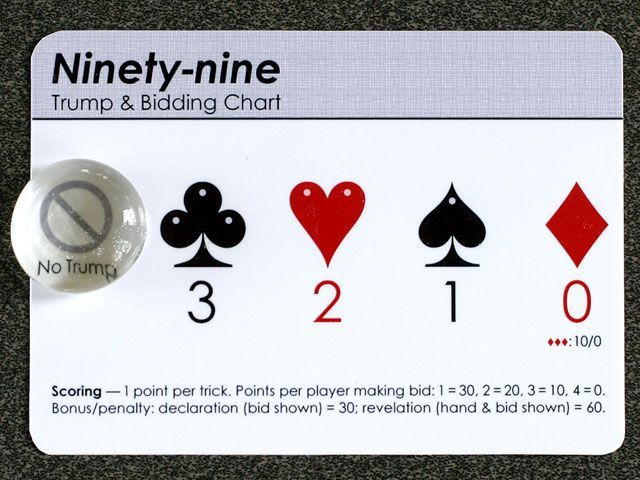
At the table, players usually make their bids in turn order, with each bid recorded or kept hidden until everyone has committed. The round is then played out, with cards, dice, or actions producing the real results. Afterward each player compares the achieved total with the bid. A player who matches it usually earns a bonus, and a player who misses by a wider margin loses more points. Scores are then carried into the next round.
The mechanic asks players to judge their own position and to anticipate how others will play. Bidding too high risks a penalty, while bidding low leaves value unclaimed, so players weigh their hand or board against what they expect to happen. Because other players' results also affect what is available, the choice requires reading the table as well as estimating chance. Scores often swing sharply, which keeps later rounds close.
Variants change the scoring curve, for example by awarding points for each success rather than only for exact matches. Some games let players bid simultaneously, and others combine the bid with a bluffing element.