Board game mechanic
Multiple Maps
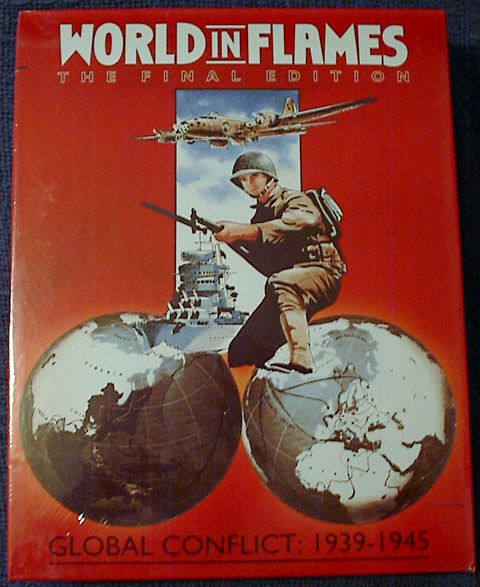
A game uses two or more separate boards or map areas during play. Players move pieces or act across them, and the layout decides where and how play can happen.
Multiple maps means that a game's playing surface is split into more than one board or map section, each with its own spaces, regions or terrain. The maps may be fixed parts of the box, chosen or arranged at setup, or revealed during play. What sets the mechanic apart is that positions on one map relate to positions on another, so a player's choices are not confined to a single area.
At setup, each map is placed in a set arrangement, often side by side or in a chosen order, and players put their starting pieces on one or more of them. On a turn, a player moves units within one map or across to another through connecting edges, gateways or special spaces. Combat, collection or scoring is then resolved either on each map separately or on the combined total, depending on the game.
Players must decide which map to focus on, whether to spread their pieces thin or concentrate them, and when a crossing between areas is worth its cost. Tracking several boards adds bookkeeping and can make the full state of the game harder to read at a glance. When maps are drawn at random, planning around an unknown layout adds luck, while fixed maps reward learning the geography over several plays.
Some games let maps be added or removed during play, and others build the playing area from smaller map tiles that players arrange. Maps may also carry different rules, so each has its own terrain or scoring. Overlapping maps, where one board is laid over part of another, are a related variant.