Board game mechanic
Physical Removal
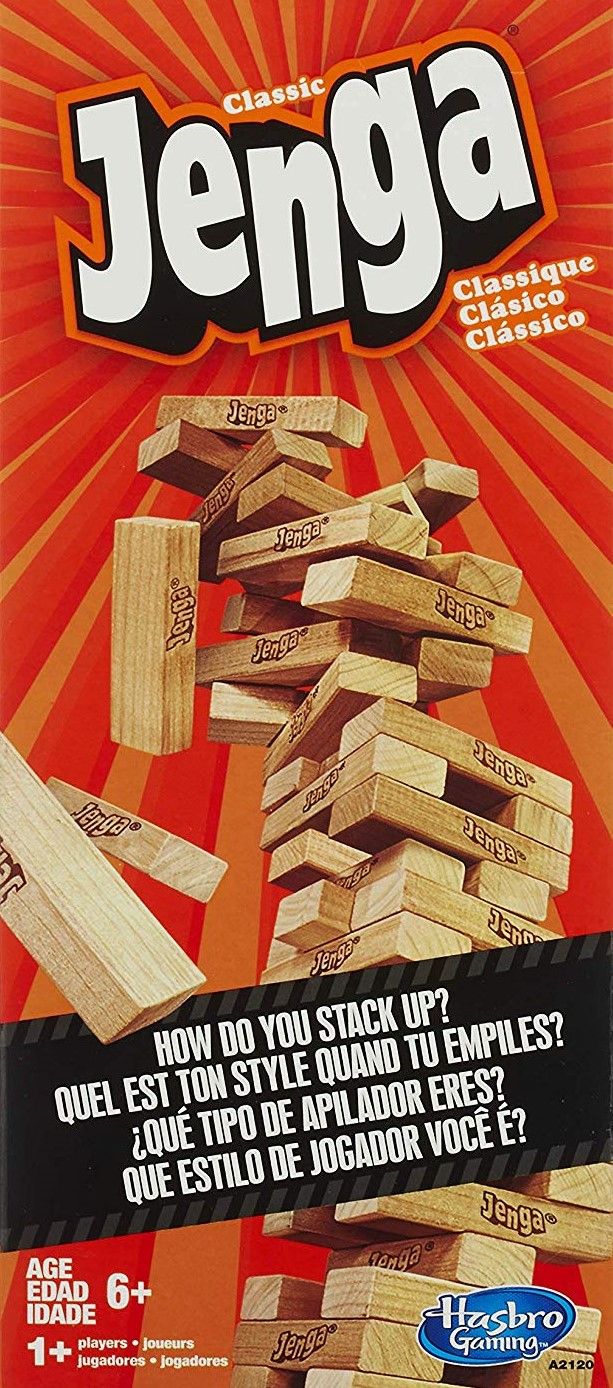
Players take turns pulling pieces out of a stacked structure without making it fall. The player who causes a collapse usually loses the turn, points, or the game.
Physical removal is a mechanic in which players take pieces out of a physical structure, such as a stack of blocks, one at a time. The structure must stay standing after each removal. The arrangement of the pieces itself serves as the game state, so there is often no board, card, or score sheet that tracks what has happened.
On a turn, the active player chooses a piece that the rules allow to be taken and removes it by hand, usually without disturbing the others. Many games restrict which pieces may be touched, such as only pieces in certain layers or only with one hand. If the structure falls, the player who caused it typically loses the turn, scores fewer points, or is out of the game. Otherwise, the piece is placed on top or set aside, and the next player continues.
Players weigh the value of a piece against the risk that removing it brings the structure down. Each removal makes the next one harder, so decisions grow tense as the structure thins. Steadiness of hand and reading how the structure is balanced matter alongside planning, and a collapse can come from an unlucky wobble. Some players enjoy this pressure, while others find it stressful.
Some games combine removal with scoring, hidden goals, or cooperative objectives, where the whole group loses if the structure falls. Others use it only for a single round or a tiebreak.